High-performance implants designed for complex spinal reconstructive surgeries.
The global spinal fusion market is currently experiencing a transformative era, driven by an aging population and an increasing incidence of degenerative disc diseases. Spinal rods and connectors form the backbone of posterior stabilization systems, serving as the essential "bridge" that maintains vertebral alignment during the fusion process. In 2024, the demand for high-strength titanium alloy (Ti-6Al-4V ELI) and Cobalt-Chrome (CoCr) rods has surged as surgeons seek materials that offer both fatigue resistance and MRI compatibility.
Technologically, the industry has shifted from standardized, rigid fixation to more dynamic and patient-specific solutions. Globally, North America and Europe remain dominant in terms of market value, but the Asia-Pacific region is emerging as the fastest-growing hub for manufacturing and consumption, thanks to improving healthcare infrastructure and the presence of world-class OEM spinal rod manufacturers in China.
Industry analysts project a CAGR of over 5.8% for the spinal implant market through 2030. The integration of AI-assisted surgical planning and robotic guidance has placed a higher premium on the precision of connectors and rods, ensuring they interface perfectly with automated toolsets.
How the industry is evolving to meet modern surgical needs.
Minimally Invasive Surgery (MIS) is the gold standard. Modern connectors are becoming more streamlined to reduce soft-tissue disruption and post-operative pain for patients.
Beyond Titanium, there is a growing interest in Carbon-PEEK rods which offer elasticity similar to human bone, reducing the "stress shielding" effect often seen with ultra-rigid implants.
Global distributors are moving away from single-source reliance. They now prioritize ODM spinal rod suppliers who can offer rapid prototyping, CE/ISO certification, and consistent quality control.
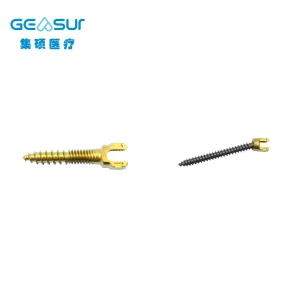
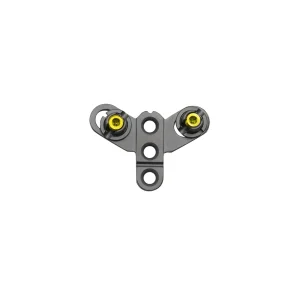
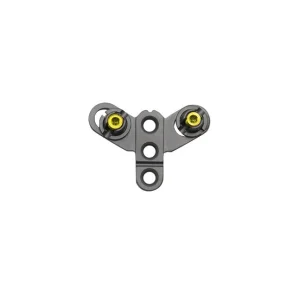
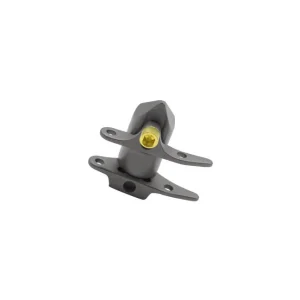
Our Titanium Alloy Domino Connectors are engineered for maximum versatility in spinal reconstructive surgery. Designed to connect rods of various diameters or to extend existing constructs, these connectors utilize a low-profile design to minimize patient discomfort. As a leading OEM manufacturer, we ensure every connector undergoes rigorous fatigue testing to withstand the biomechanical stresses of the human spine.
China has evolved from a "low-cost factory" to a "high-tech manufacturing hub" for medical devices. Our facility combines the cost-efficiency of integrated supply chains with the precision of high-end CNC machining from Switzerland and Japan. We understand that in the spinal industry, a 0.01mm deviation can be the difference between success and failure.
Our spinal systems are adapted for diverse clinical scenarios:
Trauma Centers: Rapid stabilization for spinal fractures using our high-strength rod systems.
Geriatric Clinics: Specialized connectors designed for osteoporotic bone, focusing on load distribution.
Correction of Deformity: Precise rod contouring capabilities for Scoliosis and Kyphosis treatment.
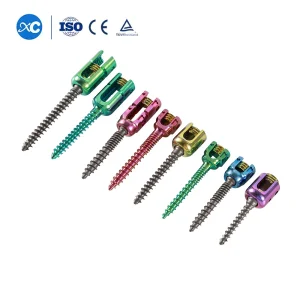
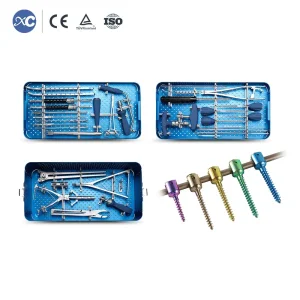
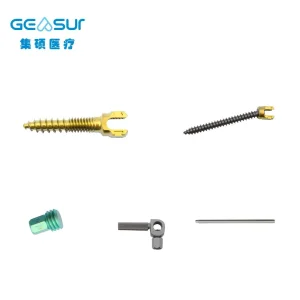
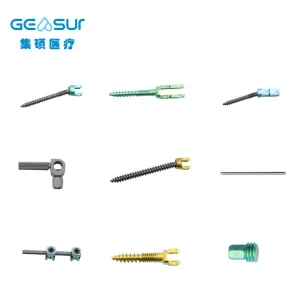
This comprehensive system integrates our signature spinal rods with polyaxial pedicle screws. The top-loading mechanism and optimized thread design offer superior pull-out strength. Available in both 5.5mm and 6.5mm variants, this system is the preferred choice for surgeons in Latin America and Southeast Asia due to its balance of ease-of-use and mechanical stability.
To date, our products have been widely used in dozens of countries across Asia, Latin America, Africa, and Europe, and have gained recognition from local distributors and surgeons.
A major strength of the company lies in its expertise in 3D printing and customization. With advanced technology, the company is able to create personalized medical devices that perfectly fit each patient. This customization not only enhances treatment outcomes but also improves patient comfort and overall satisfaction.
We offer orthopedic implants, joint implants, brushless motors, and other products.
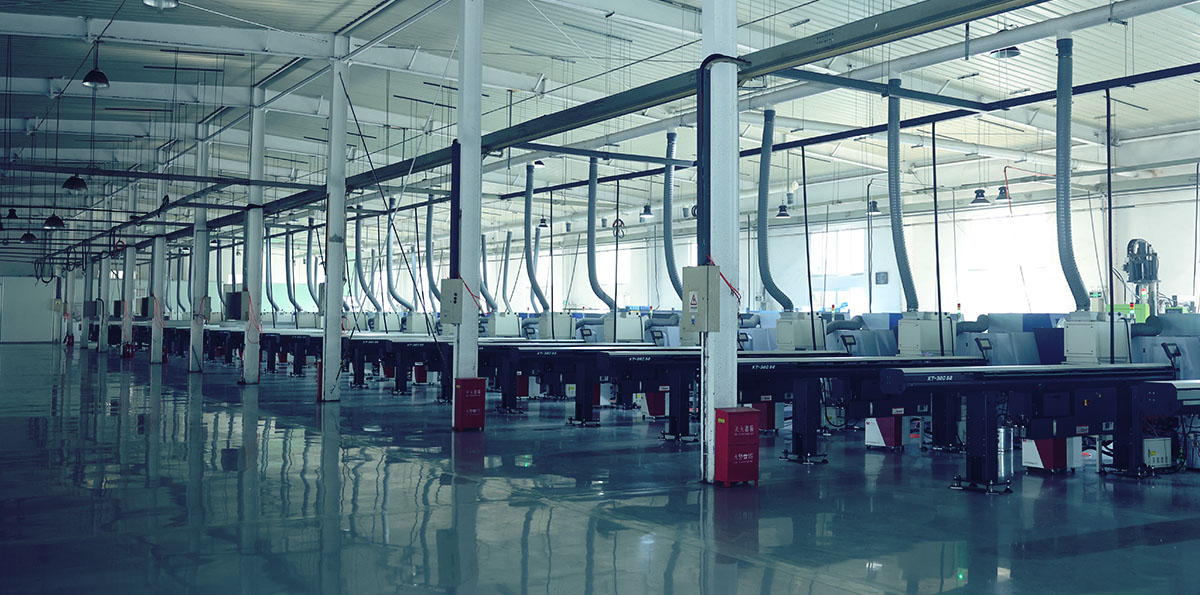
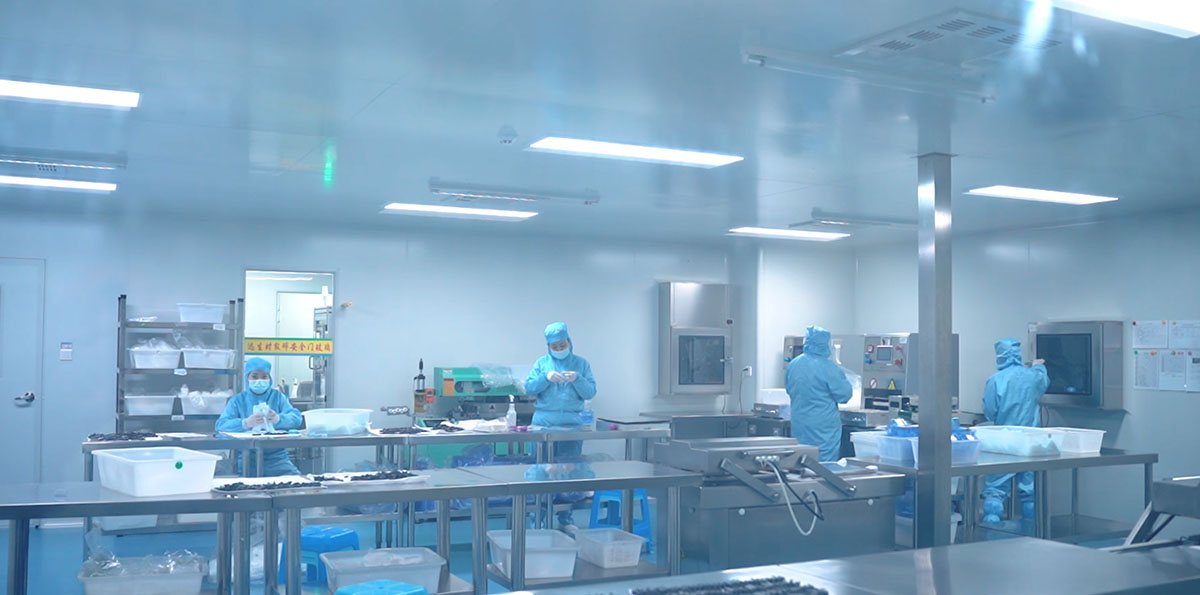
Our spinal rods are manufactured through a multi-stage process that ensures biological safety and mechanical integrity. The process begins with raw material sourcing from medical-grade titanium suppliers. Each batch of titanium is tested for chemical composition and tensile strength.
Using 5-axis CNC machines, we sculpt the rods and connectors to exact dimensions. This ensures that the locking mechanism between the rod and the pedicle screw is seamless, preventing any micro-movements that could lead to implant failure or patient pain.
We apply Type II anodizing to our titanium components. This process creates a biocompatible oxide layer that increases corrosion resistance and allows for color-coding (e.g., blue for 5.5mm, gold for 6.5mm), helping surgeons identify the correct components instantly in the operating room.
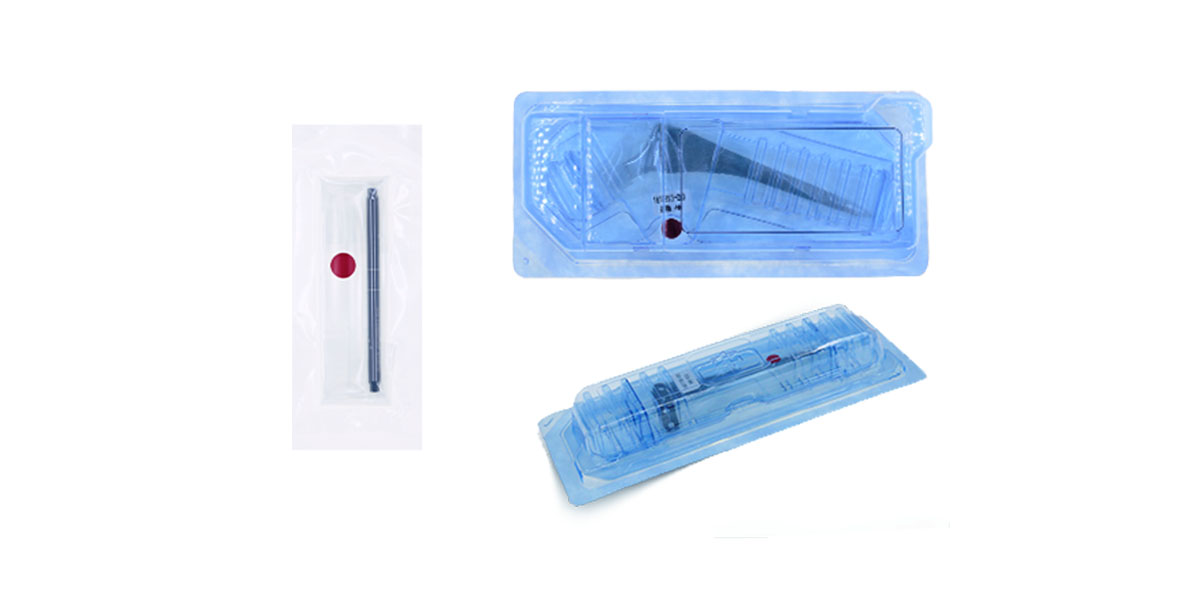
Every single connector and rod is inspected under high-magnification cameras. We conduct "pull-out" and "static compression" tests according to ASTM F1717 standards. Furthermore, we offer disposable, pre-sterilized versions of our domino connectors, reducing the burden on hospital sterilization departments.
Spinal connectors are often the "weak link" in long-segment constructs. To counteract this, our engineers have developed a proprietary internal locking geometry that increases the contact surface area between the rod and the connector set-screw. This design significantly reduces the risk of rod slippage under heavy physical loads, common in trauma or corrective surgeries.
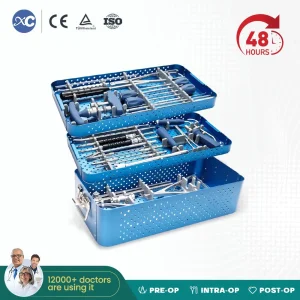
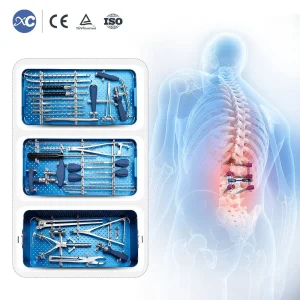
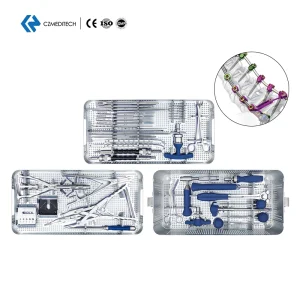
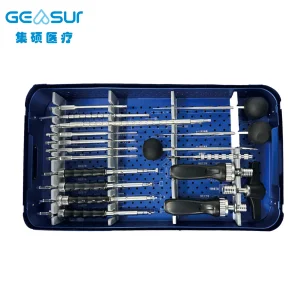
Comprehensive surgical sets for professional medical institutions.
 Axton Orthopedic Implants