In the contemporary landscape of spinal surgery, the selection of the right Interbody Fusion Cages is not merely a procurement decision; it is a critical clinical choice that directly impacts patient fusion rates, long-term stability, and biomechanical recovery. As a leader in this domain, understanding the manufacturing ecosystem—from material science to global regulatory compliance—is essential for distributors and surgical centers alike.
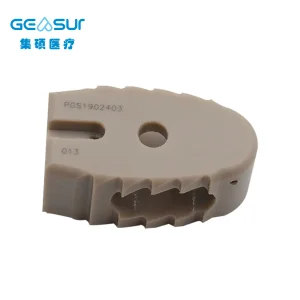
The transition from traditional bone grafts to advanced synthetic Interbody Fusion Cages represents a paradigm shift. Today's manufacturing focus has moved toward PEEK (Polyetheretherketone) for its elastic modulus closeness to human bone, minimizing the "stress shielding" effect. Furthermore, the integration of 3D printing (Additive Manufacturing) allows for lattice structures that promote osseointegration, a technique where porous titanium structures mimic the architecture of trabecular bone.
The future of spinal implants is leaning toward "Smart Implants" and bioactive surfaces. Our roadmap focuses on:
Sourcing medical implants globally requires stringent adherence to international standards. Whether you are in Asia, Latin America, or Europe, understanding the factory's Quality Management System (ISO 13485) is non-negotiable. Our manufacturing processes prioritize:
Q: What are the primary advantages of 3D-printed Interbody Fusion Cages?
A: 3D printing allows for complex, porous architectures that promote bone ingrowth (osseointegration) better than traditional smooth surfaces, while maintaining superior structural integrity.
Q: How do you ensure product safety across different international markets?
A: We strictly adhere to ISO 13485 standards. Our products undergo rigorous biocompatibility, mechanical fatigue, and sterilization validation tests compliant with global medical device regulations.
Q: Do you offer OEM/ODM services for spinal implants?
A: Yes, we specialize in customizable orthopedic implants. From design drafting to final sterile packaging, we provide a full-cycle OEM solution tailored to your clinical or market specifications.
Q: What is the typical lead time for custom implant projects?
A: Lead times vary by complexity. Standard orders are fulfilled efficiently, while custom patient-specific implants involve rapid prototyping workflows designed to minimize waiting times without compromising quality.
 Axton Orthopedic Implants