When evaluating orthopedic implants, a crucial factor is cost. What is the difference between PEEK and titanium orthopedic implants in terms of cost? According to the latest industry reports, titanium implants typically range from $1,200 to $2,500, while PEEK implants can be priced between $800 and $1,500. These differences may seem straightforward, yet the implications are significant for healthcare providers and patients alike.
PEEK, a polymer noted for its biocompatibility, is often more affordable. This lower price point may encourage its use in various orthopedic procedures. Conversely, titanium, while more expensive, offers unparalleled strength and durability. Many experts argue that the long-term benefits of titanium justify its higher cost. However, this perspective may overlook the potential for PEEK implants to reduce immediate financial strain on healthcare systems.
In the end, cost is just one aspect to consider. Both materials present unique advantages and challenges. A piecemeal approach to cost analysis could lead to oversimplified conclusions. As the industry evolves, ongoing research will be essential for determining the best applications for PEEK and titanium in orthopedic surgeries.
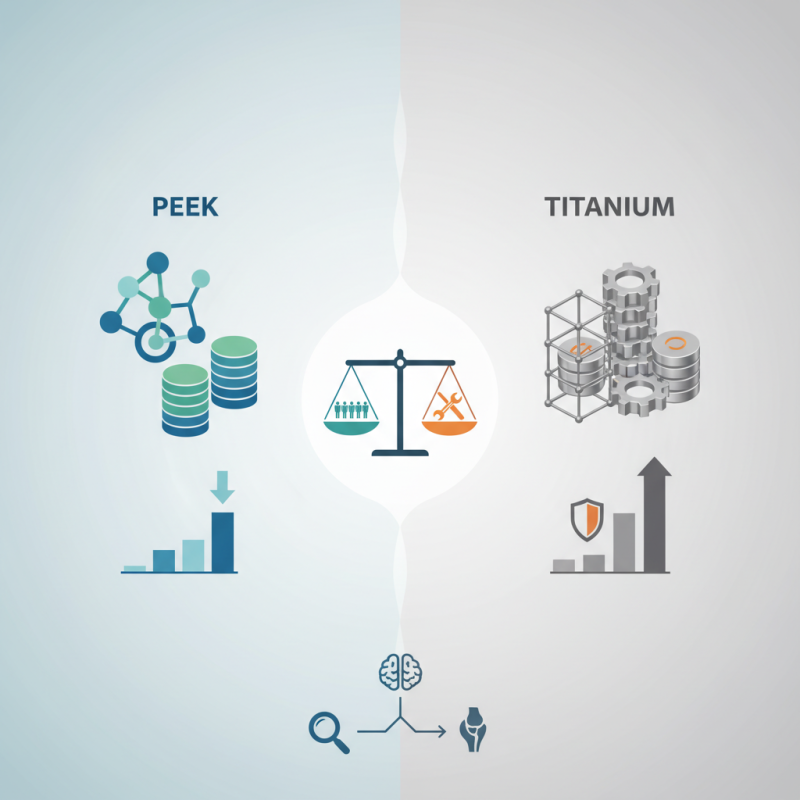
Cost Factors of PEEK Orthopedic Implants
When examining the cost factors of PEEK orthopedic implants, several elements come into play.
PEEK, or polyether ether ketone, is gaining traction due to its favorable biomechanical properties and cost-effectiveness.
A study from the Journal of Orthopedic Research noted that PEEK could reduce overall surgery costs by up to 20% compared to metal implants.
One of the key cost factors is manufacturing. PEEK implants typically require less complex processes than titanium. This results in lower production costs.
Additionally, PEEK is lighter and may reduce shipping fees.
Research indicates that the long-term savings in patient recovery times can offset initial expenses.
However, some physicians express concerns about PEEK's mechanical strength in high-load applications, prompting further investigation.
Moreover, the cost of post-operative care should not be overlooked.
While PEEK may initially appear less expensive, its performance in certain situations can lead to complications.
A survey conducted by the Orthopedic Implant Technology Institute revealed that nearly 15% of respondents reported complications with PEEK under high-stress conditions.
Balancing these factors is essential when considering overall cost-effectiveness for orthopedic applications.
Cost Factors of Titanium Orthopedic Implants
The cost of titanium orthopedic implants can vary widely depending on several factors.
Material properties impact pricing significantly. Titanium is known for its strength, biocompatibility, and lightweight nature.
However, sourcing and manufacturing this metal can be expensive. Costs often include research, development, and precision machining.
Other factors also play a role. The complexity of a specific implant design can increase costs.
Custom implants, often required for unique patient anatomy, are usually more expensive.
Additionally, demand influences pricing; higher demand can lead to higher costs.
Surgeons and hospitals also have their own pricing strategies based on regional economic conditions.
Price is not the only consideration. While titanium implants can be costly, they often provide
superior long-term results.
However, some may question if the benefits justify the higher price. This leads to ongoing discussions among healthcare professionals,
highlighting the need for a deeper understanding of cost versus value in orthopedic surgery.
Each case is different. Costs should be evaluated in the context of patient outcomes and procedural success.
Comparison of Manufacturing Costs for PEEK and Titanium
When comparing the manufacturing costs of PEEK and titanium orthopedic implants, several factors come into play. PEEK, a polymer known for its biocompatibility, generally has lower raw material costs. It can be processed with less complex machinery, reducing operational expenses. In contrast, titanium requires specialized equipment and more energy-intensive processes. This can increase the overall cost of titanium implants.
However, the cost difference is not the sole consideration. Titanium boasts superior mechanical properties, such as strength and durability. Despite higher manufacturing costs, its longevity may offset initial expenses. There’s also the need to evaluate wear and tear. PEEK may not withstand extreme conditions as effectively as titanium. This raises questions about its long-term value in critical applications.
Moreover, there are ongoing debates about the life cycle of these materials. While PEEK implants can be cheaper to produce, their performance may vary based on the application. It’s essential to analyze the specific needs of each patient. Balancing cost against performance is a challenge that medical professionals often face. Ultimately, the manufacturing costs of these materials are only part of a larger picture.
Long-Term Cost Considerations: PEEK vs Titanium Implants
The long-term cost considerations for PEEK and titanium orthopedic implants are significant. PEEK (Polyether ether ketone) is generally less expensive initially than titanium. However, various studies indicate its performance over time can impact overall costs. For example, a report from the Journal of Biomedical Materials Research suggests PEEK implants may require more frequent replacements compared to titanium due to wear and tear.
A cost analysis from a leading orthopedic organization revealed that while PEEK implants can save up to 30% on initial costs, their longevity often falls short. Titanium implants provide superior biocompatibility and durability. This means fewer revisions, potentially lowering surgical expenses in the long run. Some estimates show that a titanium implant, with proper care, might last over 15 years, while PEEK could average around 10 years before needing replacement.
Moreover, the hidden costs of complications from PEEK implants can outweigh the initial savings. The American Academy of Orthopaedic Surgeons has highlighted that recurrent surgeries contribute significantly to healthcare costs. Choosing an implant based on short-term financial metrics alone might overlook these critical factors. Long-term effectiveness is crucial for financial and patient outcomes.
Cost Comparison of PEEK vs Titanium Orthopedic Implants
Insurance Coverage and Reimbursement for PEEK and Titanium Options
When considering orthopedic implants, cost and insurance coverage are essential factors. PEEK and titanium are popular materials, each with distinct financial implications. Recent data indicates that PEEK implants cost around 20-30% less than titanium counterparts. This price difference often influences hospitals' choices, especially in budget-constrained settings.
Insurance coverage varies significantly between PEEK and titanium implants. According to industry reports, approximately 70% of insurance providers offer better reimbursement for titanium implants. This disparity can create challenges for patients needing PEEK implants, as they may face out-of-pocket expenses. Some insurance policies struggle to recognize PEEK's advantages, such as lower risk of MRI artifacts and reduced ion release, which can result in confusing coverage decisions.
Healthcare professionals must navigate this landscape carefully. As more facilities adopt PEEK implants, it’s critical to advocate for updated insurance guidelines. Reflecting on these dynamics is vital; patients may question why their coverage seems unfair. Ensuring equitable access to both implant types will require collaborative efforts from insurers, manufacturers, and healthcare providers.
FAQS
: PEEK generally has lower raw material costs compared to titanium.
PEEK requires less complex machinery, reducing operational expenses. Titanium needs specialized equipment, increasing overall costs.
Titanium has superior strength and durability, which can justify higher costs over time.
PEEK implants may need more frequent replacements, impacting overall cost-effectiveness.
Recurrent surgeries for PEEK implants can significantly increase healthcare costs over time.
Titanium implants may last over 15 years, while PEEK typically lasts around 10 years.
No, focusing only on initial costs can overlook long-term effectiveness and potential complications.
Yes, the specific needs of each patient can influence the implant's performance over time.
Balancing cost against performance is often a significant challenge when selecting implants.
Yes, complications from PEEK implants can lead to hidden costs that outweigh initial savings.
Conclusion
The article "Cost Comparison PEEK vs Titanium Orthopedic Implants" delves into the financial aspects surrounding two popular implant materials used in orthopedic procedures. It begins by outlining the cost factors associated with PEEK orthopedic implants, including material expenses and production efficiencies. In contrast, it examines the cost factors for titanium implants, which often include higher raw material costs and complex manufacturing processes.
A pivotal part of the discussion is a comparative analysis of manufacturing costs for both PEEK and titanium implants, highlighting their long-term financial implications. Long-term cost considerations are crucial, as they can influence decisions based on durability and potential complications. The article concludes with insights into insurance coverage and reimbursement policies for both implant types, addressing a key question: What is the difference between PEEK and titanium orthopedic implants in terms of cost? This comprehensive overview provides valuable information for healthcare providers and patients weighing their options.

 Axton Orthopedic Implants